
For decades, science fiction shaped a bold vision of the future, where jet-powered cars streaked across the sky and left clouds of steam behind, much like in The Jetsons. Today, as automotive brands accelerate toward electric, hybrid, and hydrogen technologies, an unconventional experiment attempted to revive that retro-futuristic dream. Instead of batteries or fuel, it relied on high-pressure steam. The concept sounded dramatic and visually striking, but modern mobility demands more than spectacle.
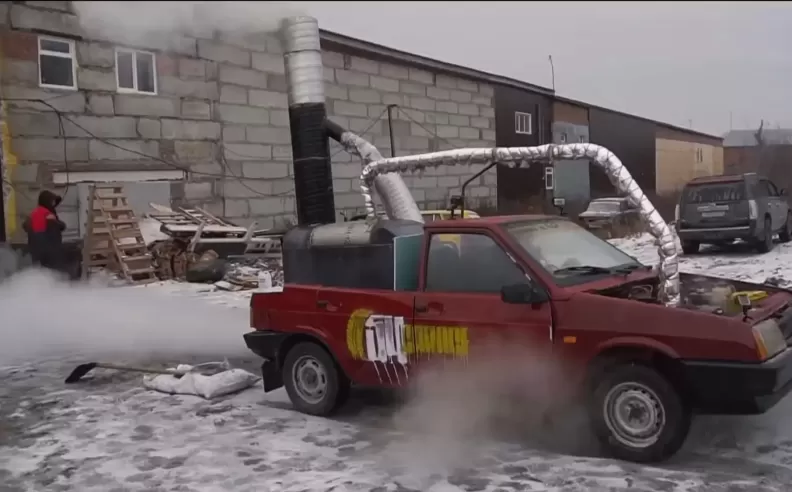
Recently, the team at Garage 54 modified an old Lada by installing a massive external water tank and heating it with open flames to generate high-pressure steam. After multiple attempts, the car managed to move forward for a short distance, proving that steam can indeed produce significant force in brief bursts. The demonstration delivered an impressive visual effect, echoing the cinematic fantasy of jet propulsion.
However, the reality quickly revealed its limits. Generating usable steam required hours of preparation, and maintaining extreme pressure introduced serious safety concerns. High stress levels even caused structural deformation in the vehicle’s body, highlighting the difficulty of controlling such raw force. Placing a pressurized water tank and active fire inside a daily-use vehicle clearly conflicts with modern expectations of reliability and safety. Ultimately, the project showcased engineering creativity rather than a viable transportation solution.

Today, the automotive industry prioritizes efficiency, sustainability, and operational convenience. Manufacturers invest heavily in advanced battery systems, refined hybrid platforms, and hydrogen technology that deliver consistent performance with minimal preparation time. Compared to these advancements, steam propulsion feels outdated and impractical, lacking both scalability and ease of use.
Modern vehicles serve more than symbolic or entertainment purposes. They support daily routines, professional commitments, and family responsibilities. Waiting hours to generate steam pressure or risking mechanical instability does not align with the fast-paced lifestyle many men in the region lead. While jet-inspired steam cars may remain visually captivating and nostalgic, real-world engineering favors solutions that balance innovation with practicality. In the end, steam may belong to history books and animated fantasies, not to the highways of tomorrow.

Started my career in Automotive Journalism in 2015. Even though I'm a pharmacist, hanging around cars all the time has created a passion for the automotive industry since day 1.






 SHARE
SHARE