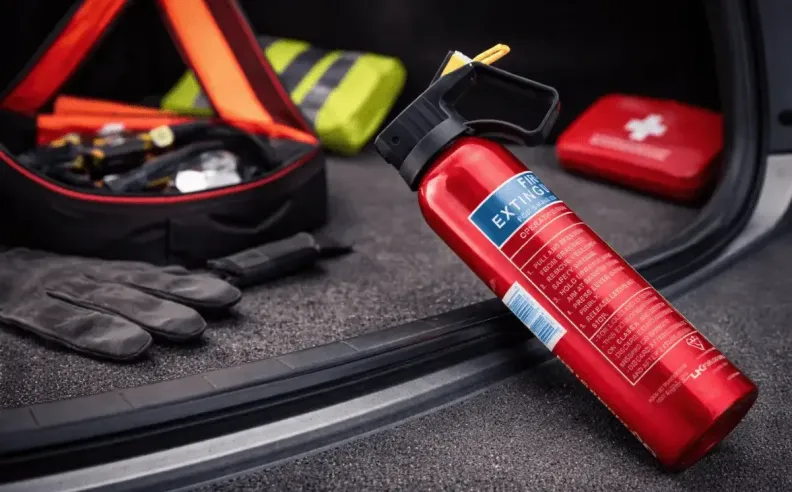
As summer temperatures rise across the Gulf, parked cars quickly turn into extreme heat chambers. Even when the outside temperature reaches around 50 degrees Celsius, the interior of a closed vehicle can exceed 70 or even 80 degrees. This raises a common concern among drivers who prioritize safety inside their vehicles. Many wonder whether keeping a fire extinguisher inside the car is actually safe, or if extreme heat could turn it into a hidden risk. Understanding the science behind how these devices are built and how they react to heat helps clarify the real situation and ensures drivers stay prepared without compromising safety.
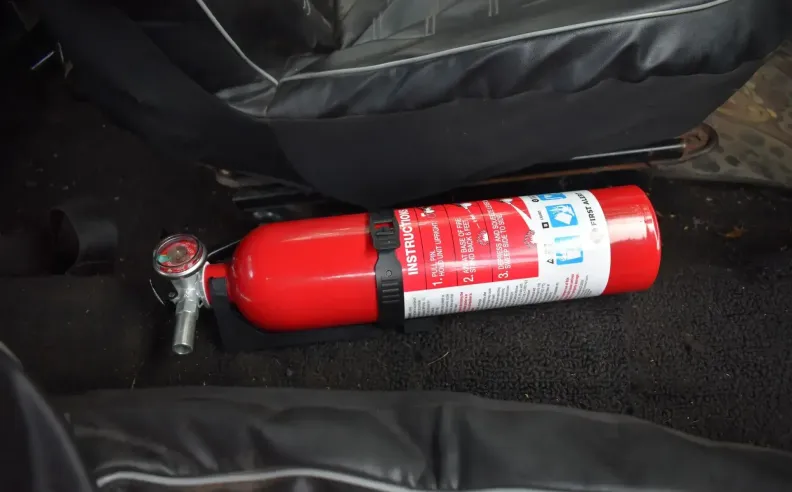
Manufacture fire extinguishers to handle demanding environments and high internal pressure. Design certified units to meet strict global and regional standards such as UL or CE, which require them to operate safely within a wide temperature range. Most portable extinguishers can function and be stored between minus 30 and 60 degrees Celsius without structural risk.
Build the metal cylinder with a strong safety margin, allowing it to withstand pressure levels several times higher than what it normally holds. This means that even under extreme summer heat inside a vehicle, the chances of a sudden explosion are extremely low from a mechanical standpoint.
Focus engineering efforts on durability and safety valves that regulate pressure when needed. Even when exposed to heat beyond recommended limits, the extinguisher is far more likely to release pressure gradually rather than fail catastrophically. This makes it reliable in terms of structural integrity, even in the harsh climate conditions of the Gulf.
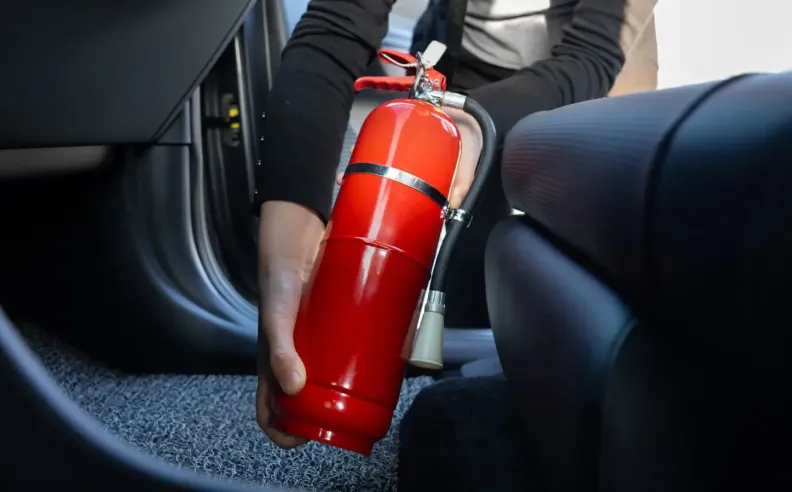
Expose a fire extinguisher to prolonged high temperatures and different types of issues begin to appear. Instead of explosion, the real concern becomes performance loss. Heat causes the internal gas, such as nitrogen or carbon dioxide, to expand. This increase in pressure may trigger the built in safety valve to slowly release gas, leading to a gradual loss of pressure without the driver noticing.
Damage sensitive internal components over time, especially rubber seals and plastic valves. These parts can dry out or degrade, creating small leaks that reduce the extinguisher effectiveness when it is actually needed. In dry powder extinguishers, heat can also cause the chemical agent inside to clump together, making it harder to discharge properly during an emergency.
Improve safety by choosing the right storage location inside the vehicle. Avoid placing the extinguisher on the dashboard or rear shelf where direct sunlight significantly increases heat exposure. Store it instead in the trunk or securely under a seat where temperatures are relatively lower. Check the pressure gauge regularly and make sure it stays within the safe green zone. Select certified products that meet regional standards to ensure they are designed for Gulf climate conditions.

Started my career in Automotive Journalism in 2015. Even though I'm a pharmacist, hanging around cars all the time has created a passion for the automotive industry since day 1.



 SHARE
SHARE