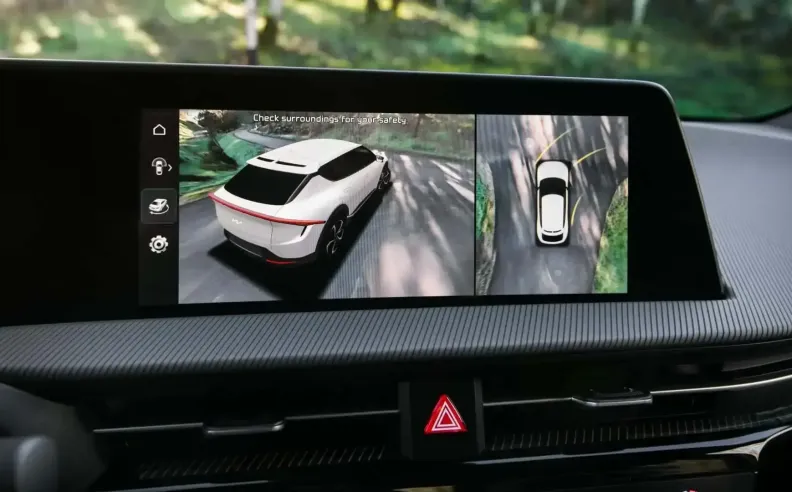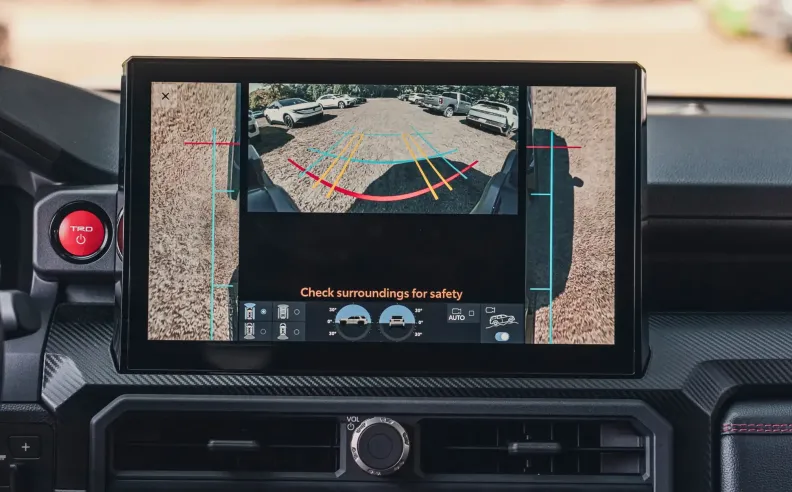
Shift your car into reverse and one of the first things you will probably notice is a set of colored lines appearing across the rearview camera display. Turn the steering wheel and some of those lines begin to curve, seemingly predicting exactly where the car will go.
They may look like a simple graphic added to make parking easier, but dynamic rearview camera guidelines are connected to vehicle data that allows the system to estimate the path your car will follow. Understanding what these lines actually represent can make parking in tight spaces much easier and safer.
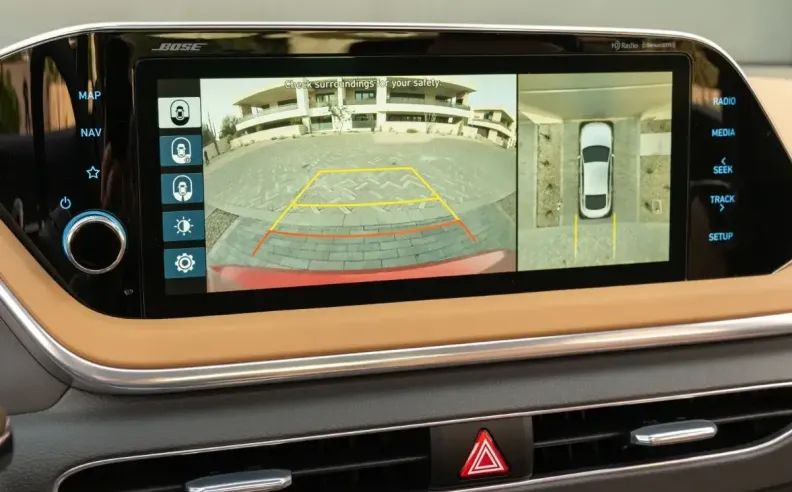
Dynamic guidelines usually rely on information from the steering angle sensor. The vehicle knows how far the steering wheel has been turned and uses that information together with factors such as wheelbase and vehicle dimensions to estimate the direction the car will travel.
The parking system then projects this predicted path onto the camera image.
When the steering wheel is turned to the right, the guidelines curve toward the expected path on the right. Turn left and the projected lines move in the opposite direction.
This gives the driver a visual preview of the direction the vehicle is likely to follow before moving farther into a parking space.
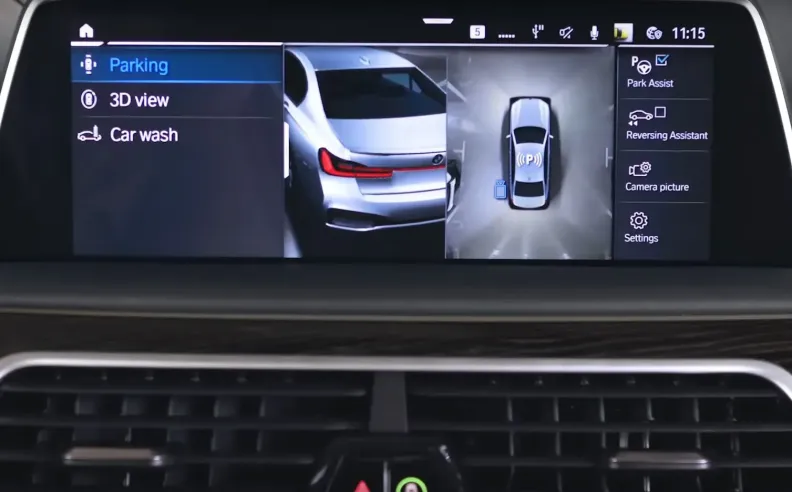
Many rearview camera systems display both fixed and dynamic guidelines, and the two serve different purposes.
Fixed lines normally remain in the same position regardless of steering input. They help drivers judge the approximate width of the vehicle and the space available behind it.
Colored distance markers may also appear on the display. Green generally represents an area farther away from the rear bumper, yellow warns that the vehicle is getting closer to an object, and red usually identifies the closest warning zone.
The exact distances represented by these colors can vary between manufacturers, so drivers should become familiar with the system fitted to their own vehicle.
Dynamic lines serve a different purpose. Instead of simply showing distance, they move with steering input to indicate the predicted direction of travel.
The curved lines on a rearview camera translate steering input into an easy visual representation of where the vehicle is expected to travel.
Fixed guidelines help drivers understand vehicle width and distance, while dynamic lines provide an estimate of the upcoming turning path.
Once you understand what each line represents, the reversing camera becomes far more than a screen showing what is behind the car. It becomes a useful parking tool that can help you position the vehicle more accurately while still keeping your own observations and surroundings at the center of every maneuver.
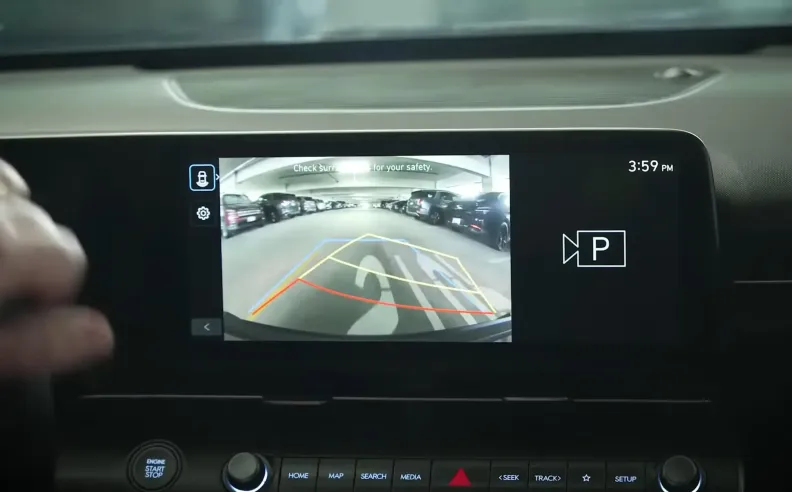
A car does not simply move straight backward when the front wheels are turned. The entire vehicle follows a curved path based on steering angle and vehicle geometry.
Dynamic guidelines attempt to visualize that curve.
This can be particularly useful when reversing into a parking space. A driver can turn the steering wheel and watch the projected path move across the screen, helping determine whether the car is aligned correctly before continuing the maneuver.
It also makes it easier to see whether the predicted path could bring the side or rear of the vehicle close to another car, curb or wall.
Rearview camera guidelines are designed as a driving aid rather than a replacement for checking your surroundings.
Wide angle camera lenses can distort distance and make some objects appear farther away than they really are. Very low objects may also be difficult to see, while obstacles positioned outside the cameras field of view can remain hidden.
Weather can create additional problems. Rain, snow, mud, dust or water droplets covering the lens can reduce image clarity even though the guidelines continue to appear normally on the screen.
Drivers should therefore continue checking mirrors, looking around the vehicle and using parking sensors when available.

Started my career in Automotive Journalism in 2015. Even though I'm a pharmacist, hanging around cars all the time has created a passion for the automotive industry since day 1.



 SHARE